
SOFTWARE THAT EVOLVES WITH ITS MEMBERS
You post the problem.
We ship the change.
Four products for marketing, sales and running a business. A practitioner steward decides on every request in public within ten business days, an AI development team builds it, and the changelog names the member who asked.
[4] days
Request to decision, median
[6] days
Decision to ship, median
[23]
Changes shipped this month
[71]%
Started as a member’s problem
Sample values. Live figures are published monthly. How the scorecard works.
Watch · under a minute
See the whole idea
in under a minute.
You post the problem, a practitioner decides in public, an AI team builds it, and the changelog names you. That’s the loop, in a vertical, captioned Short.
The four products
Four products. One rule: AI does the work, a person is at the gate.
All four run on your own AI keys, with no metering inside. Every one of them is evolved by the people who use it.
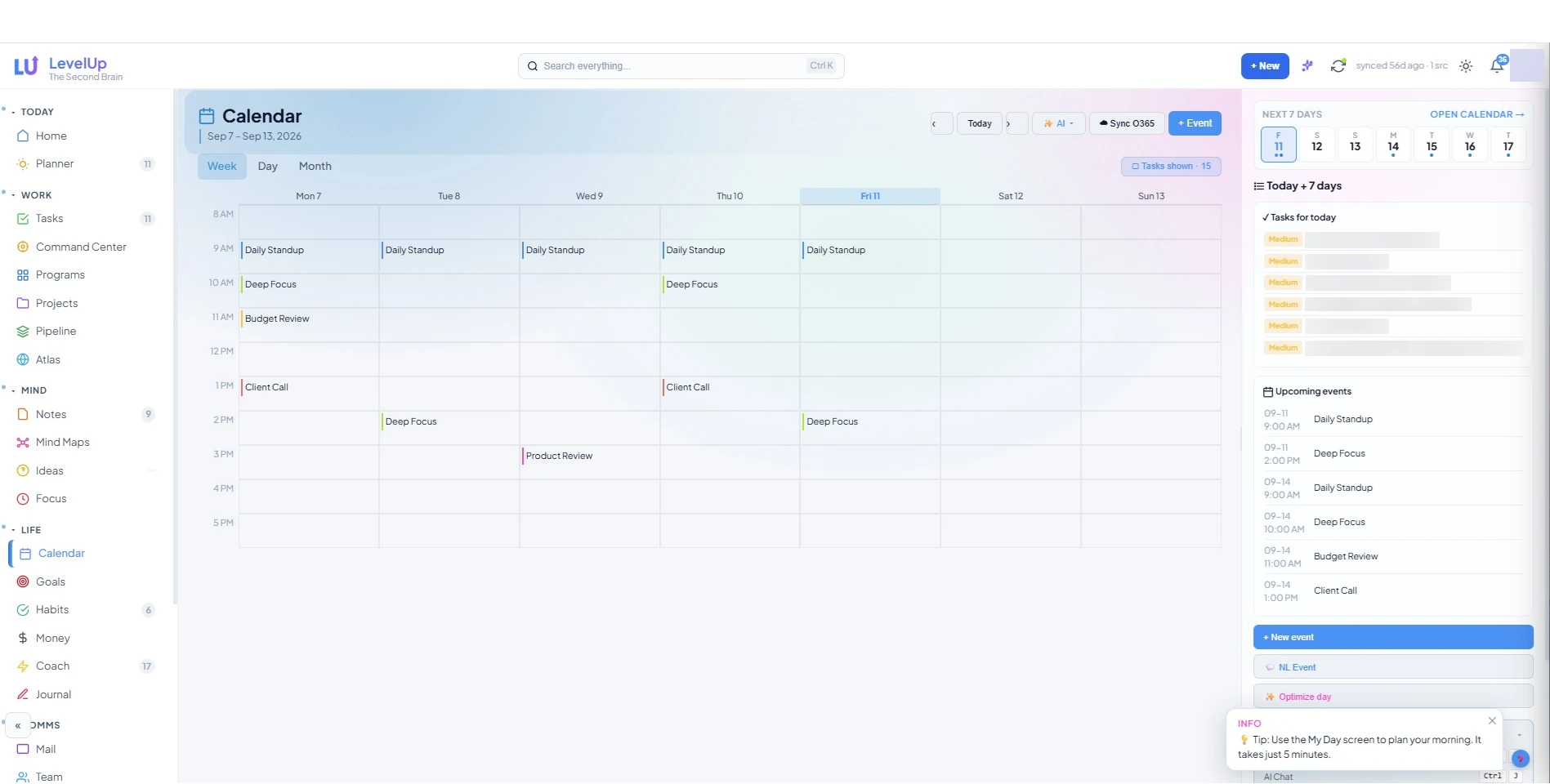
 LevelUpLive
The second brain.
One workspace for everything you’re carrying in your head. Tasks, notes, goals, habits, calendar and money, reviewed on a rhythm, with an assistant that does the work.
Holds that the weekly review is the keystone.
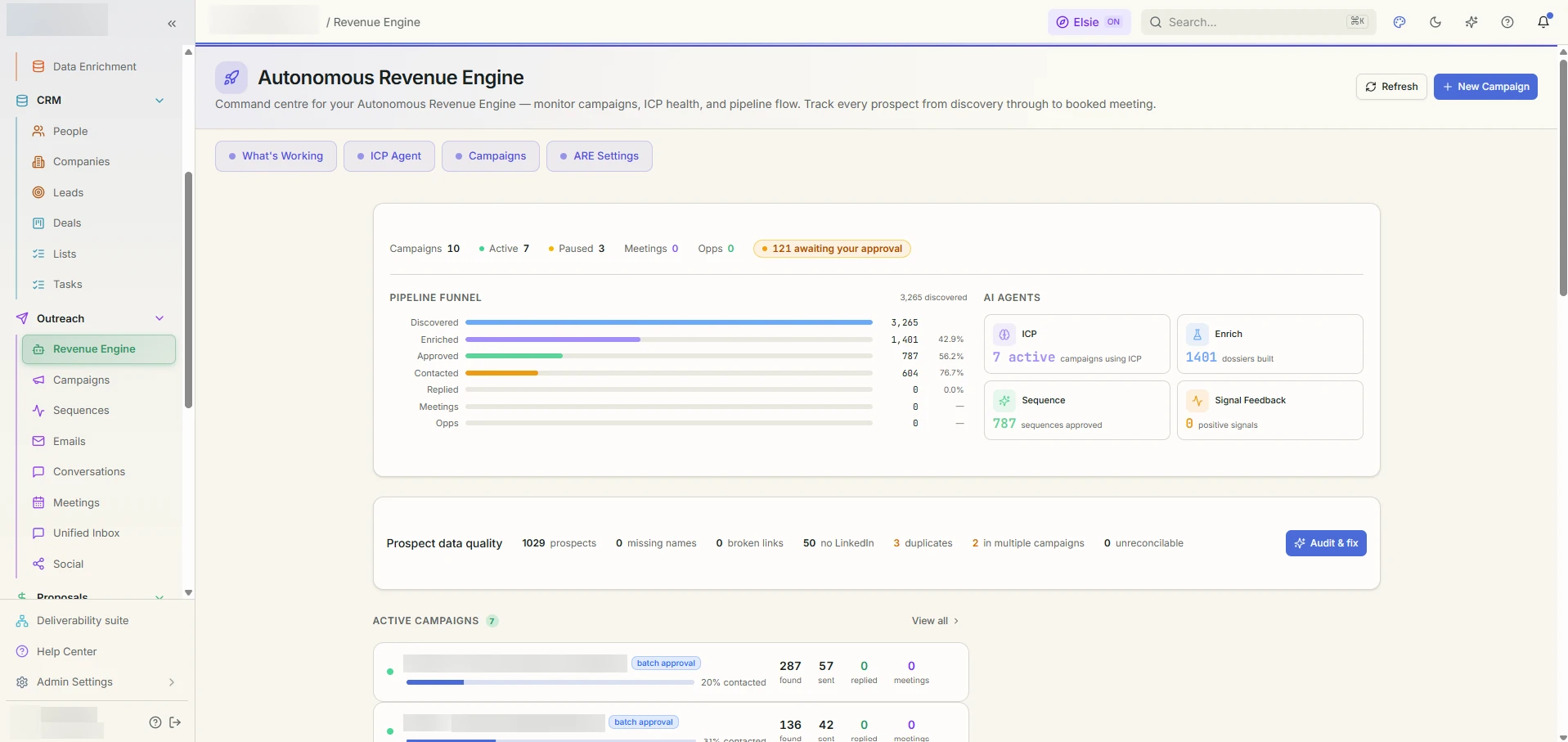
 VelocityEarly access
One job: get sales meetings booked.
Find the right people, reach them with outreach written for each one, and book the meeting. Nothing sends without a human or a dial you set.
Holds that every fact carries its source and a confidence score.
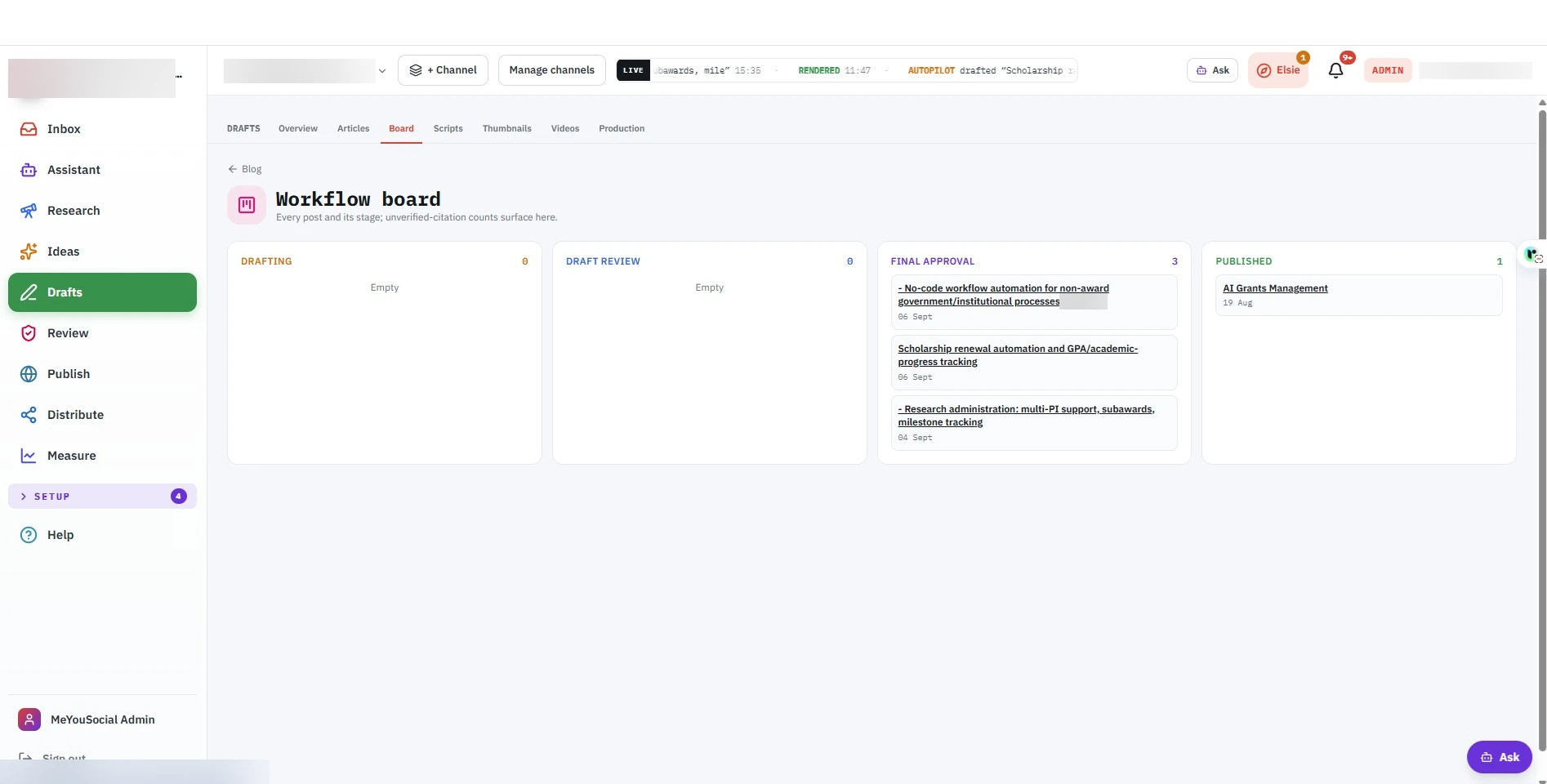
 PublisherLive
The content engine that runs mostly on its own.
Research, drafts, review, publishing and distribution to fifteen networks. Claims are sourced, not asserted. Your job is decisions.
Holds that silence means all clear.
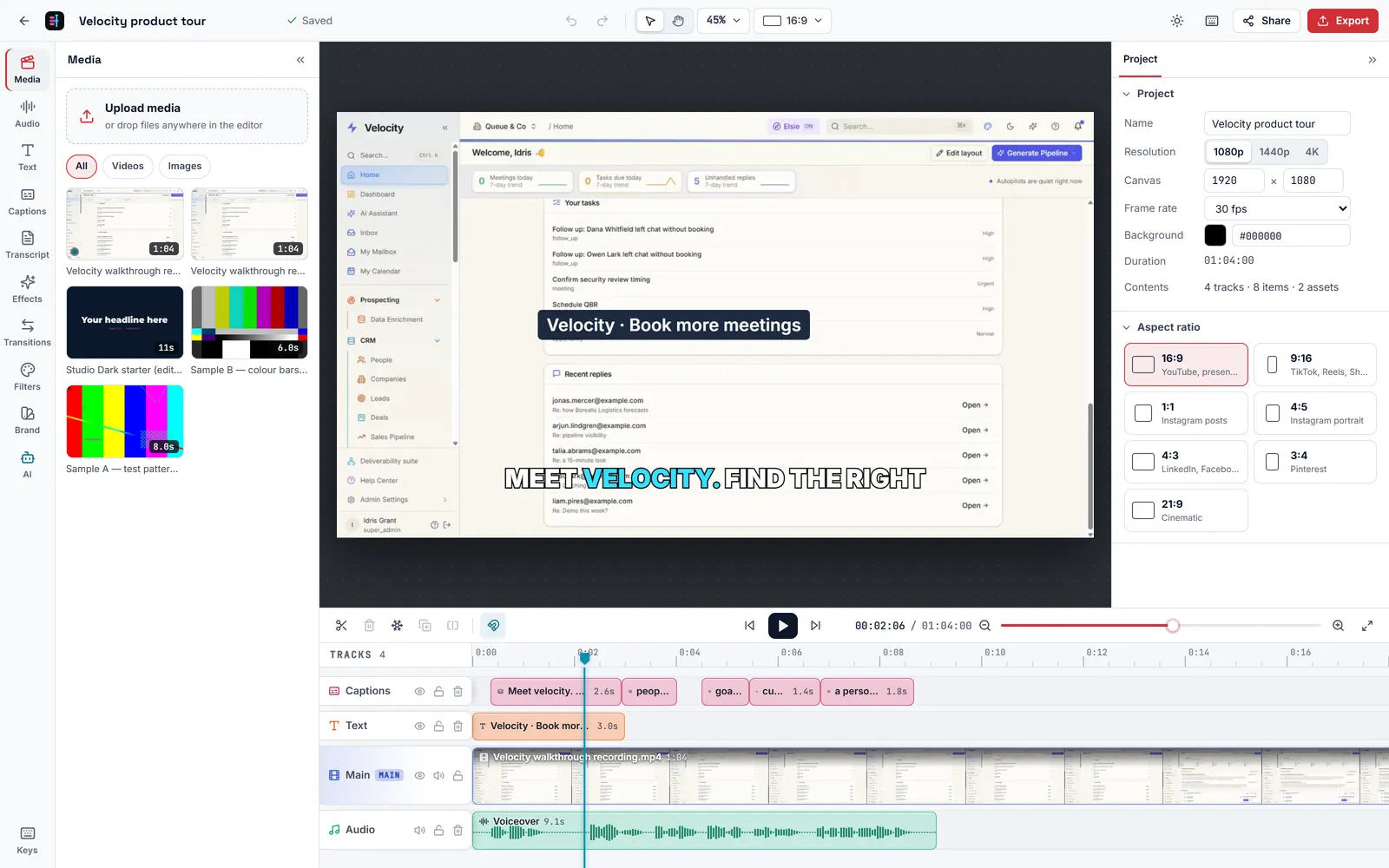
 Producer StudioWeb + Windows
Drop a screen recording. Get a finished, narrated video.
AI video production and a full timeline editor, in the browser or on Windows. Producer AI scripts, narrates and assembles the cut; you finish it by hand or by asking.
Holds that the recording is the source of truth.
How a problem becomes a change
Six stages, six colours, one loop. Each stage has something you can see and a time we commit to. These commitments are the only promises we make.


Stage 1
Request
A member posts a problem in the product’s category. The AI team asks its clarifying questions in the thread within hours.
What you see
The thread, the questions, the answers
We commit
First response within one business day

Stage 2
Decision
The steward reads the thread and the usage evidence and marks it Under review, Planned or Declined, with the reason.
What you see
The status and the reason, in public
We commit
Decision within ten business days

Stage 3
Build
The AI team implements the change in a branch behind a flag.
What you see
A build log: what was read, what was written, what was run
We commit
Started within the published sprint

Stage 4
Verify
Automated regression, layout, accessibility and data-consistency checks, then a small member testing cohort.
What you see
The check results and the testers’ notes
We commit
No release without a passing check

Stage 5
Ship
Flag on for testers, then for everyone. The changelog entry names the member who raised the problem.
What you see
The changelog, the help article, the flag
We commit
Weekly release window

Stage 6
Tell
A short changelog video and a monthly community call walk through what changed and why.
What you see
The video, the call, the recording
We commit
Weekly video, monthly call
Two details matter more than the rest. Declines are published with reasons. A community that only sees acceptances assumes silence means nobody read the request. The changelog names the member. Credit turns a list of fixes into a record of the community’s influence. The full model, with its guardrails.
The queue · live
What members asked for, and what we did about it.
| Product | The problem | Raised by | Status | Decided in | Shipped |
|---|---|---|---|---|---|
| Velocity | Expired meeting proposals could still be approved and sent, so a prospect could receive an invitation full of past dates. | LSI Media LLC | Shipped | 1 day | 5 Sep 2026 |
| Producer Studio | A release recording has long stretches of a terminal scrolling, and the script treats them as evidence and narrates them. | LSI Media LLC | Shipped | 3 days | 8 Sep 2026 |
| LevelUp | Decision notes never show up in the weekly review, so the same question gets re-decided twice and the reason is lost by Friday. | LSI Media LLC | Shipped | 3 days | 4 Sep 2026 |
| Publisher | The changelog article needs the member’s name and the request thread in a fixed place, and drafts keep putting them in different paragraphs. | LSI Media LLC | Shipped | 3 days | 9 Sep 2026 |
| LevelUp | The daily digest lists bills due but not the budget categories already over for the month, so I find out at the weekly review, a week late. | LSI Media LLC | Building | 4 days | behind a flag |
| Publisher | Social variants go out the moment an article publishes, but the changelog video renders an hour later, so the posts have no video. | LSI Media LLC | Building | 4 days | behind a flag |
| Velocity | Members who went quiet get the same re-engagement copy as cold prospects, and it reads wrong to someone who already paid us. | LSI Media LLC | Shipped | 5 days | 8 Sep 2026 |
| Producer Studio | Every weekly changelog video needs the same cold open and close, and I re-type the brief each time. | LSI Media LLC | Shipped | 2 days | in 0.2: team templates |
| Velocity | Let the engine skip the daily send cap for a campaign that is converting. Declined by the steward: daily caps, warmup and suppressions apply to every sender and no mode removes them; the charter says so in one line. |
LSI Media LLC | Declined | 1 day | – |
Every request gets a decision within ten business days. Declines are public, with the reason. Shipped entries name the member who asked.
The thesis
Every SaaS company has a feedback board. Almost none of them can afford to act on it.
Software has always been shaped by its users in theory and by its engineering backlog in practice. The gap between the two is where most product frustration lives. Engineering time is the scarce resource, and every request competes with the roadmap.
MeYouSocial inverts that. An AI development team makes the cost of building a change small enough that the scarce resource becomes judgment: deciding what is worth building, for whom, and what the product should refuse to become. That judgment comes from practitioners in marketing, sales and entrepreneurship who use the tools themselves, and from a community of members whose real problems set the agenda.
The result is not a suite of finished products with a suggestion box attached. It is a set of products that are permanently in motion, with a visible loop from a member’s problem to a shipped change, and a community that can watch the loop run.
The cost of building collapsed
An AI development team can take a well-described problem to a verified, tested change in days. Producer Studio is the proof inside the family already: a screen recording to a scripted, narrated, edited video, with a person owning the brief and the script and an AI doing the rest.
Practitioners encode their judgment directly
The best parts of the products are opinions, not features. LevelUp insists on a weekly review. Publisher refuses to publish an unsourced claim. Velocity will not send anything without a human or a dial the human set.
Ownership moved to the customer
All four products run on the member’s own AI keys with no metering inside the app. The subscription does not pay for tokens. It pays for the evolution of the product.
The suite as evidence
The most persuasive proof that the model works is that the company runs on it.
Producer Studio makes the weekly changelog video from a screen recording of the release.
Publisher writes the article, sources the claims, and distributes the video to every network on the publish day.
Velocity runs outreach to prospects and re-engages members who have gone quiet, with every send behind the approval queue.
LevelUp holds the roadmap, the steward’s weekly review, and the decision log.
Each of those is a workflow members can copy for their own businesses. The community learns how to run a company on the products by watching one being run.
Three ways in.
Tiers differ in involvement, never in whose requests get built. The apps run on your own AI keys: no metering, no credits, no tokens inside them.
Member
$49
per month
- ✓All four products: LevelUp, Velocity, Publisher and Producer Studio
- ✓The community and the request queue
- ✓The changelog, every week, with the video
- ✓The monthly community call, live or recorded
- ✓The member courses, as each is released
Contributor Recommended
$99
per month
- ✓Everything in Member
- ✓Early access to changes behind flags
- ✓A seat in the testing cohort
- ✓Office hours with the stewards
Founding
$999
per year · limited to 50 founding members
- ✓Everything in Contributor
- ✓Lifetime recognition in the changelog and on the site
- ✓A named advisory slot on one product
- ✓First call on new products
Prices in US dollars, billed monthly for Member and Contributor and yearly for Founding. The Founding tier is limited to fifty founding members and closes when the cohort is full. Enterprise builds for one organisation are priced as projects and kept separate from the community queue.
Start with a problem, not a plan.
Join, post the problem that costs you the most time, and watch what happens within ten business days.